
Table of Contents
Navigating Short-Term Rental Laws in British Columbia
All short-term rentals in British Columbia must comply with provincial BC Short Term Rental Laws effective since May 2024, according to the Government of British Columbia. These British Columbia short-term rental regulations establish a baseline for hosts, prioritizing safety and housing availability while permitting operations under strict conditions.
Principal residence short-term rental BC rules limit rentals to a host’s principal residence, defined as the home where they reside at least six months per year. Only the principal residence itself or permitted secondary suites qualify–no entire secondary properties allowed short-term. This ensures short-term rentals supplement housing rather than displace it.
BC short-term rental registration is mandatory via the province’s online platform. Hosts must register annually, obtain a unique number, and display it on all listings. As the Government of British Columbia states:
To operate legally, a person must register their short-term rental, get a registration number and include that number in any advertisement for the short-term rental.
Municipal bylaws, like Vancouver’s stricter caps, may add layers–always verify local rules alongside provincial BC STR compliance rules.
We offer compliance readiness guidance as part of our consulting services at Georgia Properties. Explore our Rental Management Vancouver consulting for tailored compliance support. Georgia Properties provides consulting only; consult licensed legal professionals for advice. Custom quotes available via contact. Once compliant, optimize your listing with our strategies.
Fundamentals of BC Short-Term Rental Laws
Understanding BC Short Term Rental Laws is foundational–here are the essentials for hosts in BC. According to official provincial legislation from the Province of British Columbia, short-term rentals–stays under 90 consecutive days–are restricted to principal residences only. This core rule aims to preserve housing availability while regulating platforms like Airbnb and VRBO. As BC Short Term Rental Laws evolve, Vancouver hosts must prioritize compliance to avoid fines and operational disruptions.
Principal Residence Requirement
The principal residence short-term rental BC definition centers on the host’s primary home, where they reside most of the year. Province of British Columbia guidelines require hosts to rent only this property, demonstrating ongoing residency. Essential proof includes:
- Utility bills showing the host’s name and address
- Driver’s license with current BC residency
- Tax records confirming principal residence status
These documents, referenced as authoritative guidelines on residency proof, must be maintained and available for verification.
The following table compares principal residence requirements against exemptions, drawing from BC Gov Principal Residence page data updated as of 2024 regulations:
| Aspect | Requirement | Exemptions |
|---|---|---|
| Definition | Must rent only principal residence | Accessory dwelling units (ADUs); commercial zones |
| Proof | Ongoing documentation | Building permits for ADUs |
This comparison underscores how strict residency rules apply broadly, yet targeted exemptions provide flexibility for specific property types. Hosts benefit from understanding these distinctions to align operations with BC principal residence rules for short-term rentals effectively.
Exemptions allow renting accessory dwelling units (ADUs) equipped with valid building permits or properties located in designated commercial zones, bypassing the full principal residence mandate. Meanwhile, mandatory BC short-term rental registration occurs via the provincial online platform. Compliant hosts follow these steps:
- Create an account on the BC government portal
- Submit principal residence proof and property details
- Receive a registration number for listings
This process ensures transparency and enforcement across British Columbia STR regulations.
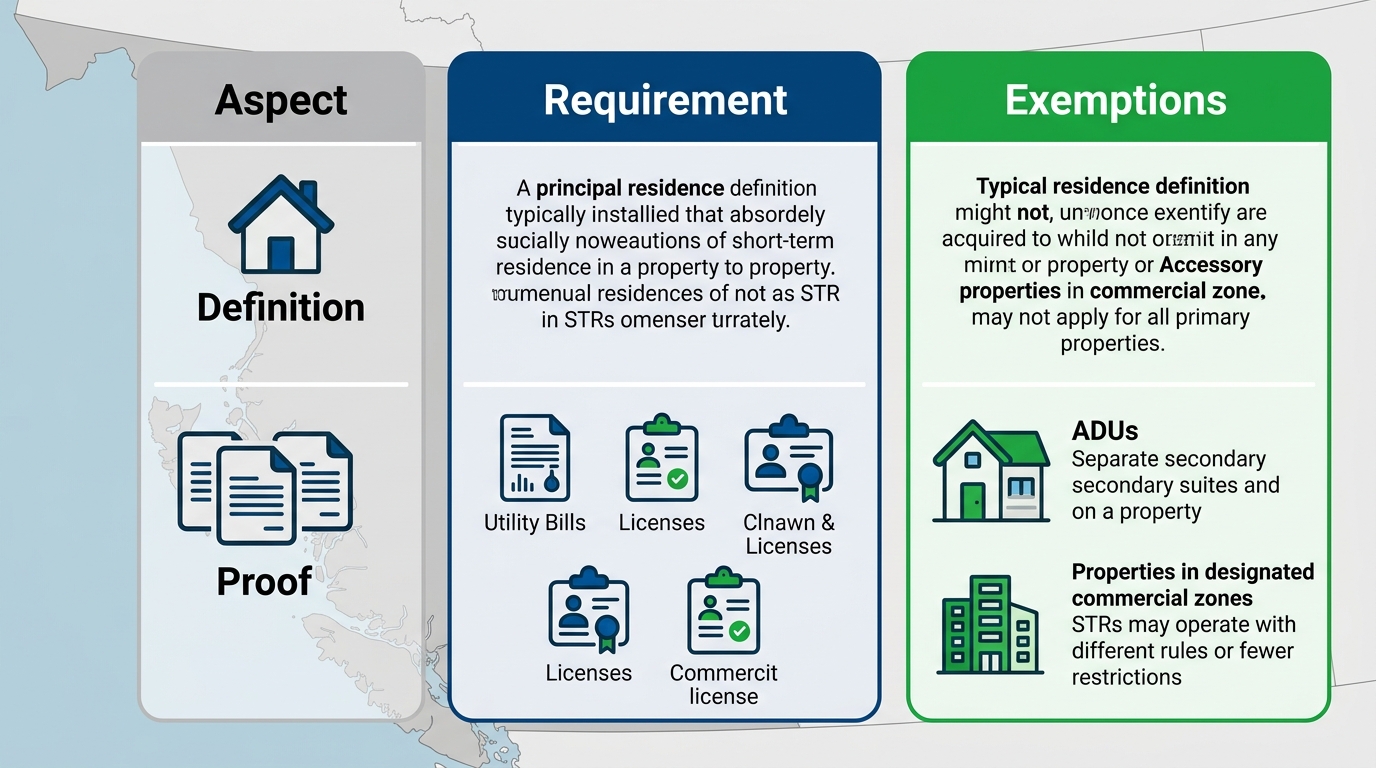
BC Short-Term Rental Regulations: Requirements and Exemptions Overview
Armed with these fundamentals, explore our tailored compliance and readiness guidance for Vancouver & BC short-term rental regulations. As a boutique, Vancouver-focused firm with 7 years serving independent owners, we provide strategic consulting on Residential Property Management Vancouver compliance needs without managing properties. Georgia Properties provides consulting and marketing only; we do not manage or operate short-term rental properties. No guaranteed results–outcomes depend on market conditions and host execution. Consult a licensed legal professional for regulatory advice.
Exploring the Short-Term Rental Accommodations Act
British Columbia’s Short-Term Rental Accommodations Act marks a significant shift in BC Short Term Rental Laws, particularly impacting hosts in Vancouver and surrounding areas. These regulations prioritize housing availability while allowing compliant short-term rentals in principal residences. At Georgia Properties, we provide compliance & readiness guidance for Vancouver & BC short-term rental regulations to help independent owners navigate these changes effectively.
Key Provisions of the Act
The Act, as outlined in authoritative provincial legislation from the Government of British Columbia, establishes core rules to regulate short-term rentals province-wide. Key among these is the principal residence short-term rental BC requirement, which limits operations to a host’s primary home, supported by proof of residency such as utility bills or voter registration. Municipalities can opt into stricter measures, amplifying enforcement through fines up to $10,000 per day for violations.
- Principal residence rule: Hosts may only rent out their main home, not investment properties, per official guidelines defining eligibility for lawful operations.
- Municipal opt-ins: Local governments adopt enhanced restrictions, tailoring rules to community needs.
- Enforcement mechanisms: Government of British Columbia legislation imposes substantial penalties, ensuring widespread adherence.
These provisions directly affect Vancouver-area hosts, where detailed vancouver short term rental regulations align with full provincial adoption. Understanding them is essential for compliance.
The following table summarizes municipalities that have opted into British Columbia STR regulations:
Municipalities Opted into STR Restrictions
| Municipality | Opted In | Specific Rules |
|---|---|---|
| Vancouver | Yes | Principal residence only; licensing |
| Whistler | Yes | Zoning-based |
| Victoria | Partial | Under review |
Sourced from BC Gov legislation updates and municipal opt-in list as of 2024. This overview highlights Vancouver’s stringent stance, emphasizing licensing and data programs that demand proactive host preparation. We assist owners in reviewing these local variations to strengthen compliance strategies.
Impact on Platforms like Airbnb
Platforms like Airbnb face new obligations under the Act, as mandated by Government of British Columbia legislation. They must verify principal residency rules before activating listings, collect and remit occupancy taxes, and report non-compliant properties to authorities, potentially leading to delistings.
- Verification duties: Platforms confirm principal residence status using documentation, preventing unlawful listings from going live.
- Tax collection: Automatic remittance of occupancy taxes streamlines compliance for hosts while ensuring revenue flow to municipalities.
- Delisting risks: Non-compliant properties face removal, disrupting operations for unprepared hosts.
These changes compel platforms to integrate robust compliance tools, reducing risks for users. For Vancouver hosts, this means partnering with experts like us for listing optimization and regulatory alignment, preserving visibility amid tighter BC Short Term Rental Laws.
Provincial Registry Introduction
The mandatory provincial registry, detailed in procedural instructions from the Government of British Columbia, requires hosts to enroll online with proof of principal residency. Platforms must report listings to this system, with implementation rolling out in 2024 to centralize oversight.
- Host registration process: Submit residency proof via the online portal for a unique identifier, enabling lawful advertising.
- Platform reporting: Airbnb and similar services transmit data on active listings, facilitating enforcement.
- Timelines: Full enforcement begins in 2024, with grace periods for initial compliance.
This BC short-term rental registration system enhances transparency and accountability. We guide hosts through enrollment, ensuring seamless integration with direct booking strategy setups.
To build a stronger short-term rental strategy, consult Georgia Properties for personalized compliance & readiness guidance. Georgia Properties provides consulting and marketing only; we do not manage or operate short-term rental properties. Consult a licensed legal professional for regulatory advice.
Practical Steps for BC STR Compliance
Building on BC STR regulations, here are the practical steps we guide independent Vancouver hosts through to ensure full compliance with BC Short Term Rental Laws. As experts in short-term rental consulting, we emphasize registration, principal residence verification, and ongoing display requirements. These official processes from the Government of British Columbia protect hosts while enabling legal operations in Vancouver and across the province.
Registering Your Short-Term Rental
We recommend starting with the BC short-term rental registration process via the official provincial portal. First, visit the BC government host registration page and create an account using your BCeID, a secure digital identity for government services. Next, submit your property address and declare it as your principal residence, confirming you live there at least six months per year. Pay the $250 CAD annual fee online, which grants a unique registration number valid for one year. According to official mandatory provincial guidelines from the Government of British Columbia, this number proves compliance on platforms like Airbnb and VRBO.
Once submitted, approval typically occurs within days, allowing immediate listing updates. We assist Vancouver hosts with personalized compliance strategies to streamline this, ensuring error-free applications without handling operations. Renew annually to avoid fines up to $3,000 for non-compliance.
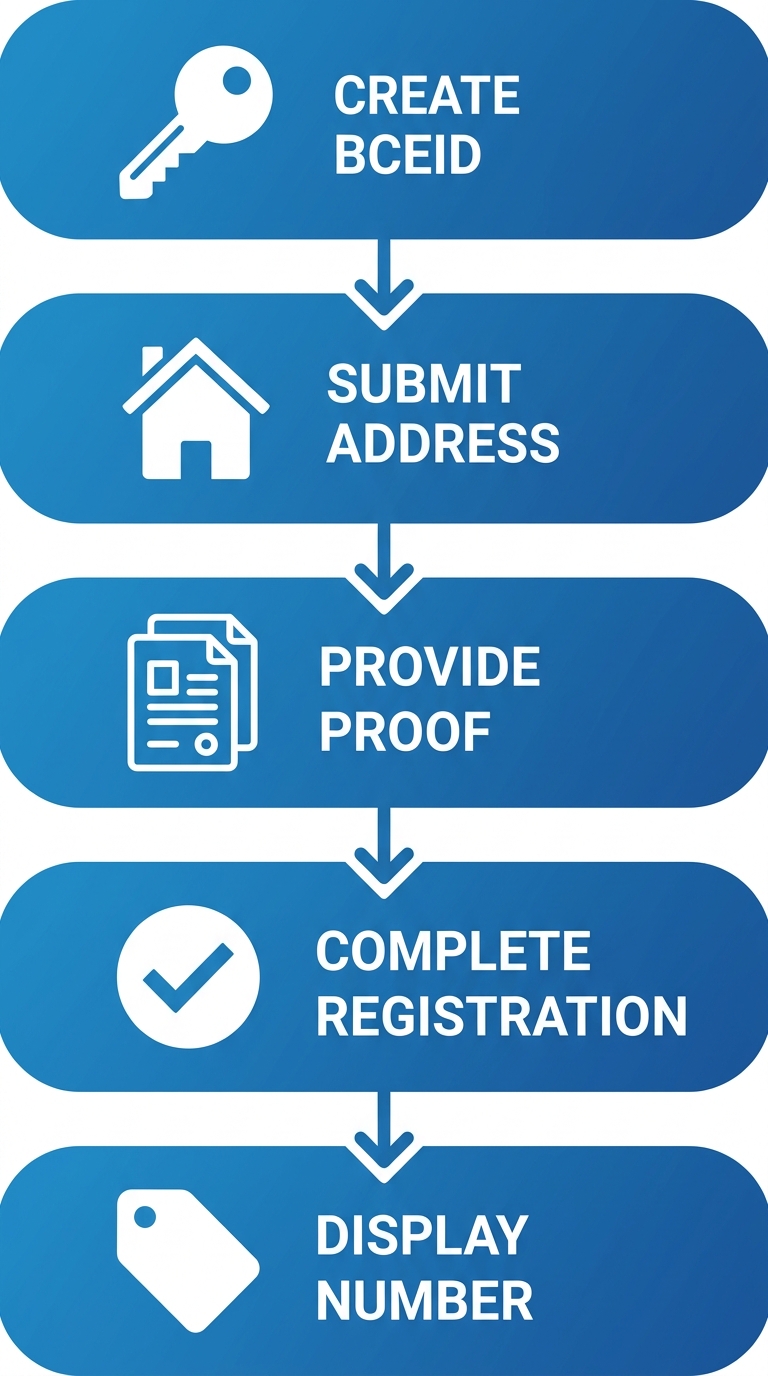
Step-by-step BC STR host registration process
This visual outlines the flow, helping you prepare documents in advance for faster processing. Contact us for consulting to Build a Stronger Short-Term Rental Strategy from day one.
Proving Principal Residence
Proving principal residence short-term rental BC status is crucial under provincial rules. Required documentation includes utility bills, driver’s license, or voter registration showing you reside at the property for at least six months annually, as per Government of British Columbia guidelines. Self-declare this during registration, but be prepared for platform audits or inspections.
Verification methods rely on honest disclosure under penalty of fines up to $3,000 per violation. Platforms like Airbnb may request proof during reviews, so organize records like T4 tax slips or BC services cards listing the address. We guide hosts through document preparation and submission strategies, offering compliance readiness consulting tailored to Vancouver properties.
Maintain digital copies for quick access, and update if your living situation changes. Our expertise ensures you meet these thresholds confidently, avoiding disruptions to your listings while preserving owner control.
Displaying Registration and Compliance Checklist
Once registered, prominently display your registration number on all Airbnb, VRBO listings, personal websites, and advertisements. This mandatory step, enforced by platforms, signals adherence to BC Short Term Rental Laws and builds guest trust.
Follow this ongoing compliance checklist we advise for Vancouver hosts:
- Annual Renewal: Set reminders 30 days before expiry; re-submit via portal and pay fee.
- Guest Notifications: Inform arrivals of house rules and principal residence status.
- Record-Keeping: Log bookings, income, and proofs for at least two years.
- Listing Updates: Refresh number on all platforms quarterly.
- Access more Vancouver STR blog resources for tips.
The following table breaks down key costs and obligations, from the BC Host Registration page with fees current as of 2024:
| Item | Details | Applies To |
|---|---|---|
| Annual Fee | $250 CAD | All hosts |
| Display Requirement | Registration number on listings | Platforms enforce |
This summary highlights essentials; platforms actively verify display compliance. With these steps secured, we help optimize your listing performance through Listing Optimization and Direct Booking Strategy–explore our services for custom quotes.
Georgia Properties provides consulting and marketing only; we do not manage or operate short-term rental properties. Consult a licensed legal professional for regulatory advice.
Advanced Considerations in BC STR Laws
Building on foundational rules, advanced considerations in BC Short Term Rental Laws demand attention to nuances that mitigate risks for hosts. Understanding these details helps independent property owners avoid costly violations and maintain compliant operations across Vancouver and British Columbia. We emphasize registration mandates and residency restrictions to support long-term success.
Registration Nuances
BC short-term rental registration is mandatory under provincial legislation, as outlined by the Government of British Columbia. Hosts must register with the province, while municipal bylaws add layers like business licenses in Vancouver. Failure to comply triggers swift enforcement, underscoring the need for proactive verification.
Principal Residence Rules
The principal residence short-term rental BC rule limits operations to a host’s primary home, with strict definitions excluding investment properties. Exceptions apply only to secondary suites within the principal residence. Government of British Columbia legislation governs these restrictions, ensuring STRs align with housing preservation goals.
Non-compliance carries severe repercussions, as detailed in the following table from BC Gov enforcement guidelines and 2024 penalty schedules. This comparison highlights violation types and consequences to inform risk-aware hosting.
Penalties for Non-Compliance
Comparison of violation types and consequences.
| Violation | Penalty | Enforcement |
|---|---|---|
| No Registration | Fines up to $1,100/day | Municipal bylaws |
| Principal Residence Breach | $5,000+ per offence | Provincial inspectors |
The Compliance Enforcement Unit (CEU), per Government of British Columbia protocols, conducts inspections, issues notices, and coordinates platform delistings. Bullet-point enforcement steps include:
- Initial warnings and fines
- On-site verifications
- Escalation to cessation orders
Leverage our Compliance & readiness guidance for Vancouver & BC short-term rental regulations to navigate these complexities. Dive deeper into compliance strategies on our georgia properties str blog. Georgia Properties provides consulting only; consult a licensed legal professional for regulatory advice. No guaranteed results.
Frequently Asked Questions on BC STR Laws
Beyond Vancouver, BC Short Term Rental Laws apply province-wide. We outline key compliance points below.
What is the principal residence requirement for STRs in BC?
Principal residence short-term rental BC rules require the property to be your primary home. Provide evidence like a driver’s license or utility bills, per Province of British Columbia regulations defining STR eligibility.
Do I need to register as a STR host in BC?
Yes, hosts must register under BC Short Term Rental Laws. Complete BC short-term rental registration online via the provincial host registry to operate legally.
What happens if I violate the principal residence rule?
Violations of the principal residence requirement can lead to fines, listing removals, or bans, as outlined in official provincial regulations.
How does host registration work?
Submit an online application to BC’s short-term rental host registry, including proof of principal residence and fees. Platforms must report registered listings, per Province of British Columbia guidelines.
For Vancouver-specific details, see our vancouver str regulations blog. Consult a licensed legal professional for regulatory advice; we provide compliance guidance only. Contact us for personalized BC STR compliance readiness.
Achieving Compliance with BC Short-Term Rental Laws
BC Short Term Rental Laws mandate compliance for hosts in British Columbia operating outside principal residences or exceeding allowed days, as outlined by the Province of British Columbia.
Key steps include:
- Complete BC short-term rental registration via the provincial online portal and display numbers on listings.
- Follow principal residence short-term rental BC rules: rent only where you reside most of the year, with day limits.
- Collect and remit provincial accommodation sales tax.
- Adhere to local bylaws.
We provide compliance readiness guidance consulting to navigate these. Consult a licensed legal or tax professional for regulatory, legal, or tax advice.
This article was researched and written with the assistance of AI tools.